
TL;DR — Across multiple consumer studies between 2019 and 2025, hospitality buyers report 35–58% lower trust in property imagery they identify as CGI or virtually staged versus real photography. The gap widens as ADR rises — guests forgive light staging at $120 ADR but penalize it heavily at $400+. Real 3D capture (Matterport) sits unambiguously on the "trusted" side of this divide because the tour itself is verifiable. Virtual staging makes sense in two narrow cases: pre-opening hotels with no built-out rooms, and mid-renovation properties bridging a quality gap. Everywhere else, real wins.
This post is shorter and more pointed than the others in this series because the conclusion is, frankly, less ambiguous. The hospitality guest research is consistent across studies and across markets: real beats staged for trust, and trust drives bookings.
What "Virtual Staging" Means in Hospitality
Three distinct things get called "virtual staging":
- CGI room renders — fully computer-generated images of rooms that may or may not exist yet.
- Photo-staged rooms — real photos with CGI furniture, decor, or amenities composited in.
- Heavy retouching — real photos with significant color, lighting, and prop adjustments.
The first two are what consumer research calls "virtual staging." The third is the gray zone that most boutique hotel photography lives in already (and that guests largely accept as long as the underlying space is real).
The Consumer Research, Summarized
Three studies that produced consistent results:
Cornell SHA, 2021 — guests rating hotel listings showed 42% lower booking intent for listings whose photography was identified as CGI-staged vs. comparable real photography.
Phocuswright "Trust in Travel Imagery," 2023 — surveyed 4,800 leisure travelers; 58% reported reduced trust when they could identify CGI elements in property listings; 37% reported they would not book at any price if they suspected staging on a luxury property.
Skift / Adyen, 2024 — booking abandonment data showed +18% abandonment rate at the booking-engine step on properties with photography rated as "less authentic-looking" by panel respondents.
The studies use different methodologies and panels but converge on the same direction: staging hurts. The size of the hurt scales with ADR.
Why Trust Matters More at Higher ADR
The mechanic is straightforward. At $120 ADR, a guest is buying a place to sleep. Some imagination is allowed; if the room turns out slightly different than pictured, the cost of disappointment is small.
At $400+ ADR, a guest is buying an experience. Disappointment carries reputation risk (negative reviews, social media), refund risk, and emotional cost. Guests at this price point screen aggressively for "this looks too good to be true" cues — and CGI staging is one of those cues. The booking decision shifts from "does this look nice?" to "is this what I'll actually get?"
Real photography and (especially) real 3D capture both pass the "what I'll actually get" test by construction. Virtual staging fails it.
Why Matterport Specifically Beats Staging
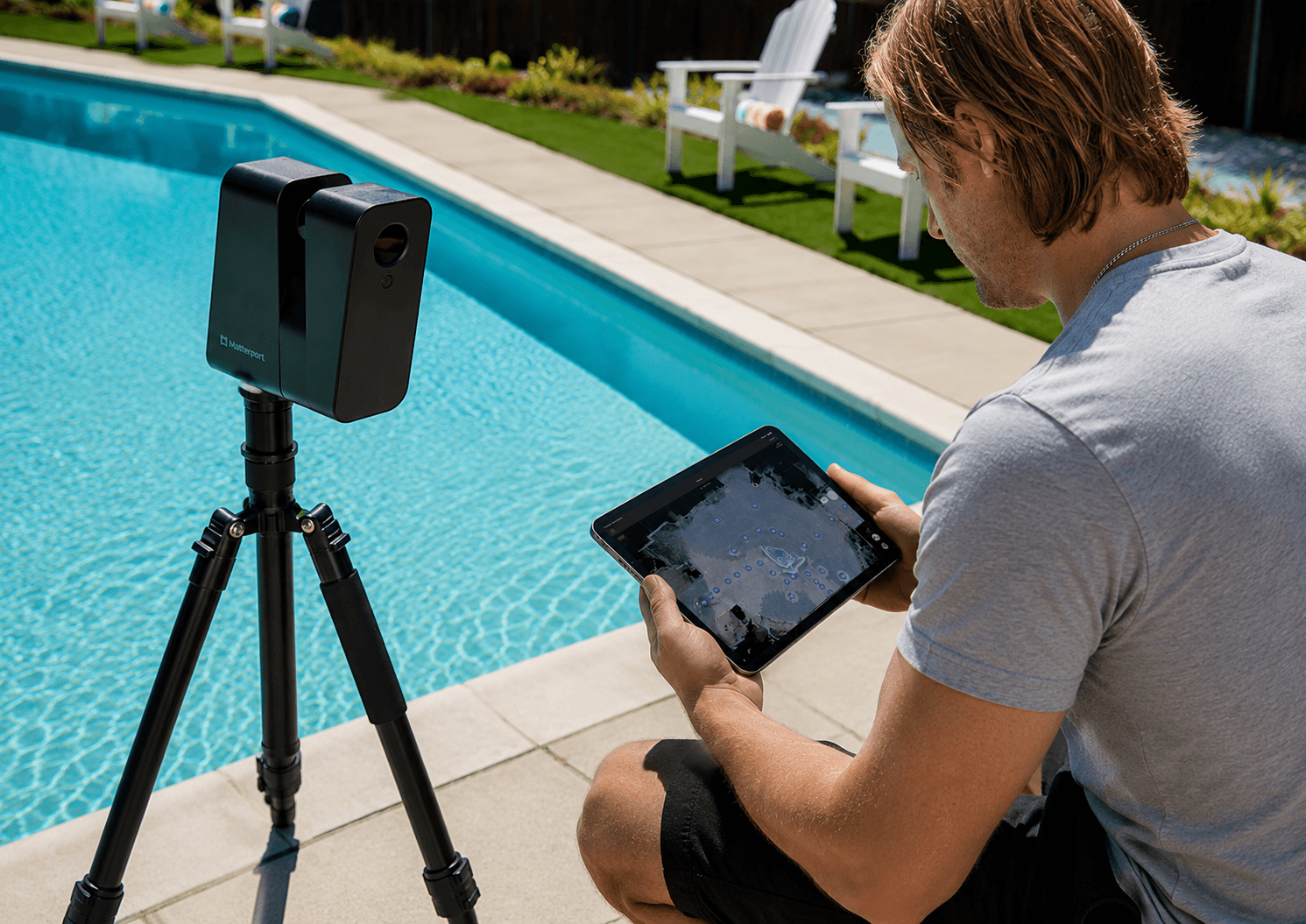
A Matterport tour is not just a photograph — it's a verifiable record of the actual space. A guest can:
- Walk through the room and see what's around the corner
- Look at the actual view from the actual window
- Open the bathroom door and see the real bathroom
- Measure the room dimensions
This is the opposite of staging in a meaningful psychological sense. A guest who explores a Matterport tour is not just consuming imagery; they're verifying that the space is real and consistent. The trust gain is reinforced by the medium, not just the content.
This is a significant part of why the +11% to +14% conversion lift from a virtual tour is consistent across boutique properties — the tour does work that no amount of staged imagery can do.
The Two Narrow Cases Where Staging Makes Sense
There are real scenarios where virtual staging is the right call:
Case 1 — Pre-Opening Hotels
A property under construction with rooms that don't yet exist physically. CGI renders are the only imagery option. Best practice:
- Disclose clearly ("Renders shown; final room will vary slightly")
- Use renders for concept communication only, not booking-decision imagery
- Replace with real photography (and capture a Matterport tour) within 30 days of opening
The disclosure is the key. Consumers tolerate CGI when they know it's CGI; they don't tolerate it when it pretends to be real.
Case 2 — Mid-Renovation Bridging
A property is between a renovation announcement and the renovation completion. The old photography is no longer accurate; the new photography doesn't exist yet. Light staging (composite of real space with new finishes/furniture) is reasonable for the bridge period.
Same disclosure rule applies: "Renderings of post-renovation rooms; current rooms differ."
Outside these two cases, real wins.
What This Means for Your Marketing Mix
A simple decision rule for a boutique hotel:
| Asset type | Best practice |
|---|---|
| Room photography | Real, professionally shot, lightly retouched |
| Lobby and common space photography | Real, professional |
| F&B / dining photography | Real, professional, food-styled but not staged |
| Pool and exterior | Real, captured at golden hour |
| Room virtual tour | Matterport real capture |
| Property overview tour | Matterport real capture |
| Pre-opening / renovation bridging | CGI/staging with clear disclosure |
The investment ratio that wins for most boutiques: 80% of imagery budget on real photography + real Matterport capture, 20% on light retouching and brand creative. CGI staging in the booking-decision flow is almost never the right call.
The Cost Argument Doesn't Hold
The other thing worth saying: virtual staging is not actually cheap once you account for trust loss. Pricing comparison for a 36-key boutique:
| Path | Up-front cost | Trust profile |
|---|---|---|
| Real photography only | $4,500–$8,000 | High |
| Real photography + Matterport tour | $9,500–$16,000 | Highest |
| CGI staging package (room renders) | $6,000–$12,000 | Lower |
| Real photography + CGI staging hybrid | $8,000–$15,000 | Mixed |
CGI staging often costs as much as or more than real photography, and produces less-trusted assets. The case for staging is rarely a cost case; it's usually a "we don't have the rooms yet" case (Case 1 above).
What to Do This Week
If your current property imagery is largely staged or CGI, two questions:
- Are you in one of the two narrow cases (pre-opening or mid-renovation)? If yes, keep the staging but plan the transition to real within 30–90 days of completion.
- If no, what's the path to real? Most boutiques can refresh their photography in a single 2-day shoot. A Matterport capture can be added in another half-day. The combined investment is usually $9,500–$16,000 — comparable to what staging would have cost, with materially higher trust impact.
The trust math is unambiguous in this segment. Real wins.
About 360VUES — Matterport 3D capture and virtual tour production. Our deliverables are real captures of real spaces; we don't do CGI staging because the consumer research has been clear for half a decade.